
Our Build Standard
What's Under the Boards: How We Frame Every Deck
Why does the frame matter if the boards are composite?
Because the boards are only as good as what's holding them up.
Most deck builders in Northeast Ohio sell the same composite brands, so the boards on every quote look about the same.
The difference is the frame, and you'll never see it once the deck is done.
A cheap frame hides its problems for a few years. Wet lumber shrinks and warps after the boards go on.
Shallow posts heave in freeze-thaw.
Unprotected joists start to rot from the top.
By the time you notice a soft spot or a wavy board, the problem is underneath, and fixing it means pulling the deck apart.
Good boards on a cheap frame is still a cheap deck. That's why we put the most care into the parts you'll never look at.
Our build standard, from the footings up
Six things go into every deck we frame. Each one is listed with the real measurement, because "quality framing" means nothing until someone tells you the numbers.
Belled footings, 38"-42" inches deep
The deck footing depth code in Ohio is approximately 38 inches deep.
 It’s about 12 inches across at the top and bells out to 16 inches at the bottom, with a 12-inch concrete footer at the base.
Why it matters: Northeast Ohio ground freezes and thaws all winter, and that movement pushes straight-sided footings up over time. The wide, belled deck footings, lock the footing in place so the deck posts don't frost heave. Second-story and taller decks get larger footings.
4x6 posts, notched and through-bolted
We use 4x6 posts, not 4x4s.
 Each notched deck posts – deck beam to post connection is secured with through-bolts.
Why it matters: A beam bolted to the side of a post hangs on its bolts. A beam sitting in a notch rests on the post itself, so the post carries the weight and the bolts hold it in place.
Kiln-dried framing lumber (KDAT)
We use KDAT lumber: kiln-dried after treatment deck framing.
 Standard pressure-treated lumber often goes in still wet from the treatment process and is prone to warping. KDAT has been dried in a kiln after it's treated, is straight and true and won't warp or twist.
Why it matters: Wet lumber shrinks, twists, and warps as it dries, and it keeps drying after your boards are already screwed down. KDAT goes in straight and true and stays that way, so your deck surface stays flat.
Joists set on top of the beam
Our joists sit on top of the beam instead of hanging off its side.
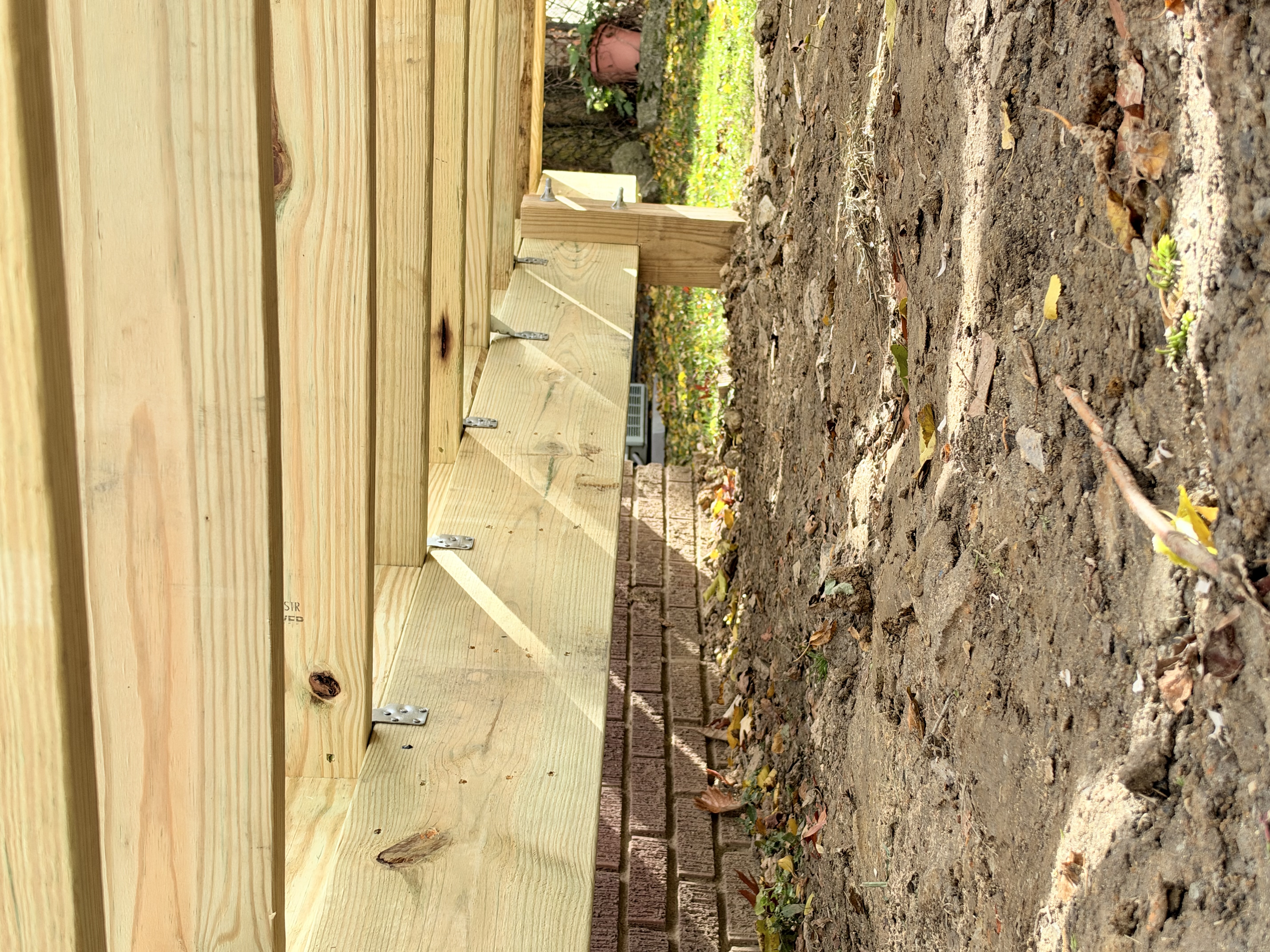
Why it matters: Resting the joists on the beam gives every board above more support.
Protected joists
Joist tape or paint goes on top of every joist before the boards go on.
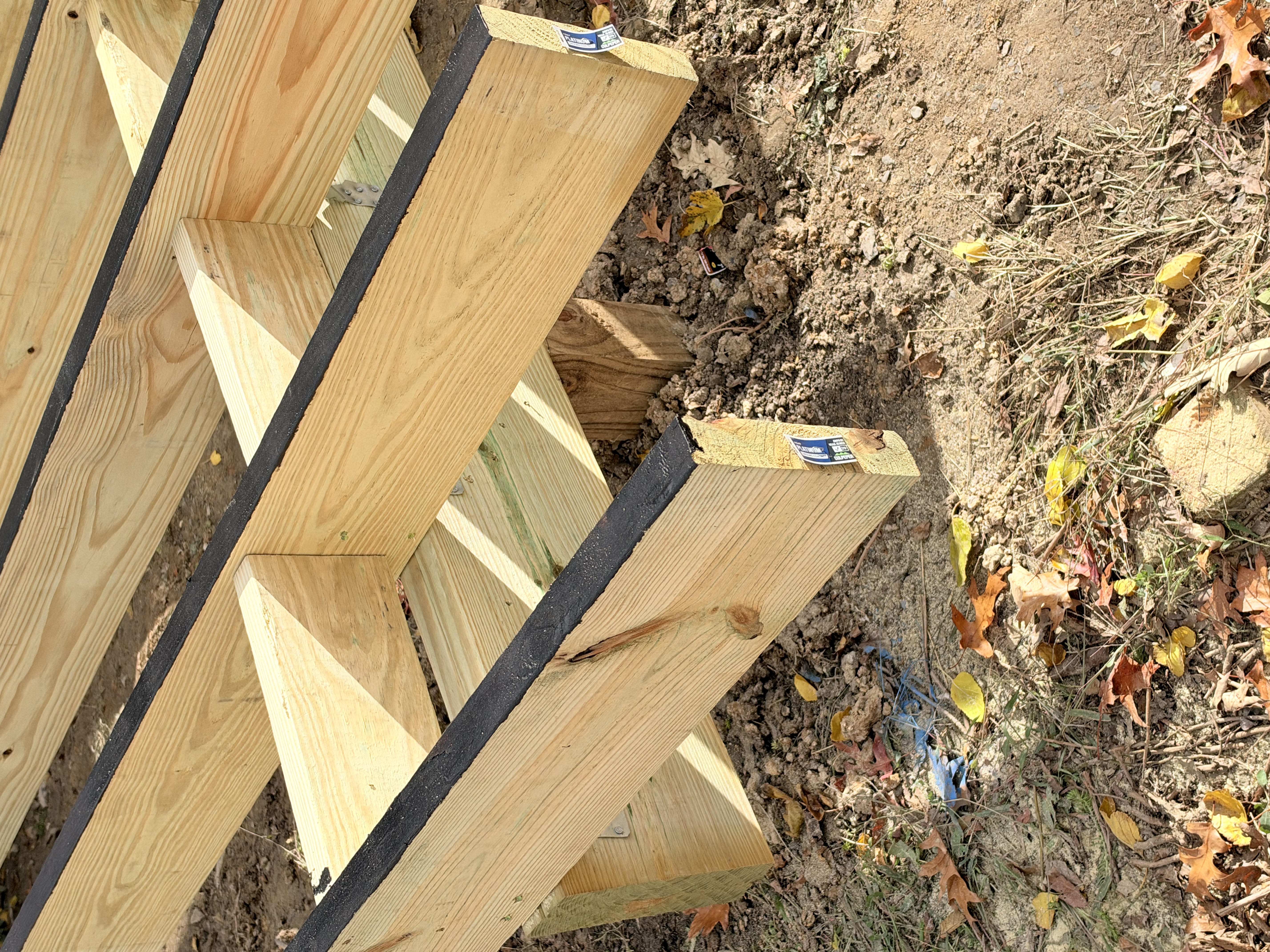
Why it matters: The top of a joist is where water collects under the boards. Protecting it fights decay over time, in the part of the deck you'll never be able to inspect.
Freestanding whenever possible
Unless a ledger board is required, we build the deck to stand on its own posts and footings instead of hanging off your house.

Why it matters: An attached deck leans on your house to carry part of its weight. A freestanding deck carries its own. If your deck needs a ledger board, we'll tell you up front and explain why.
Who checks the work?
Brian Salisbury does. Brian has built decks for 35 years. He trains every one of our crews to this standard, and nothing moves forward without his approval and sign-off.
We run about multiple crews, and the standard is the same on all of them. Bill Holton, Brian's co-owner, is your first call and your point of contact from the first estimate to long after the job is done. If something comes up later, you call Bill and he answers.
That's why we can back every deck with a lifetime workmanship warranty.
What should I ask a deck builder about their frame?
Questions to ask a deck builder. Ask every builder you're considering these five questions, including us. A good builder will answer each one with a number or a straight yes or no.


If a quote doesn't say how the frame is built, ask for it in writing before you sign.
Copyrights 2026 Master Deck Builder Cleveland | Privacy Policy | Terms of Service | Warranty