Why the Deck Frame Matters More Than the Boards
The boards get the attention. The frame does the work.
When you shop for a composite deck, most of the conversation is about boards: colors, brands, warranties. But the boards are only as good as what's holding them up, and the frame is the part you'll never see again once the deck is done.
What goes wrong with a cheap frame
- Wet lumber shrinks and warps. Standard pressure-treated lumber often goes in still wet. As it dries, it twists, and your boards go wavy with it.
- Shallow posts heave. Northeast Ohio ground freezes and thaws all winter. Footings that don't go below the frost line get pushed up over time.
- Joists rot from the top. Water collects on top of the joists under the boards. Without protection, that's where decay starts.
How we frame every deck
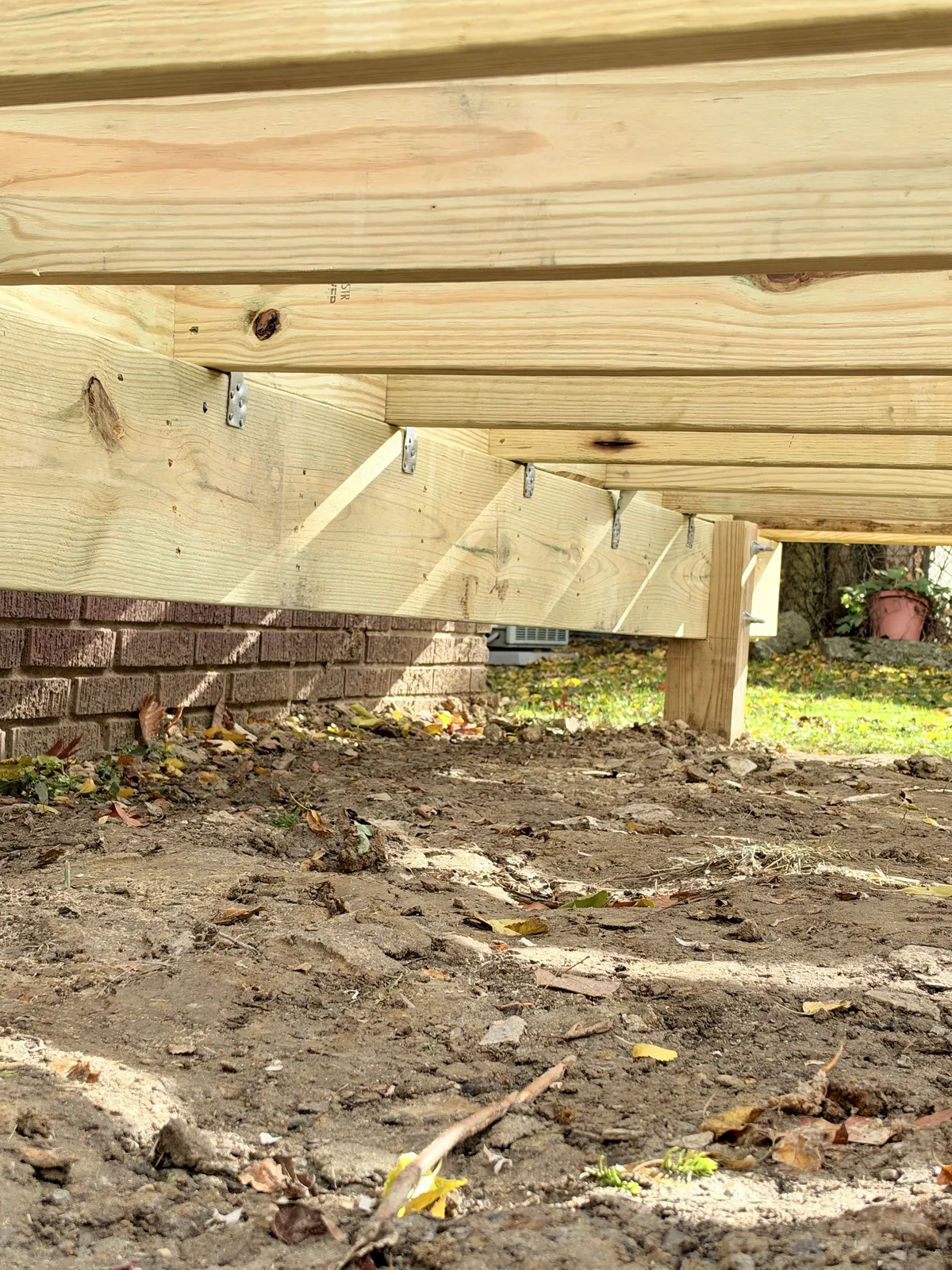
- Belled footings about 38 inches deep, wider at the bottom so they lock in place
- 4x6 posts, notched so the beam sits in the post, then through-bolted
- KDAT framing lumber, kiln-dried after treatment so it goes in straight and stays straight
- Joists set on top of the beam
- Joist tape or paint on top of every joist
- Freestanding whenever possible, so the deck carries its own weight
Brian Salisbury has built decks for 35 years. He trains every crew to this standard and signs off on every job before it's done.
Good boards on a cheap frame is still a cheap deck.
